Table of Contents
Introduction
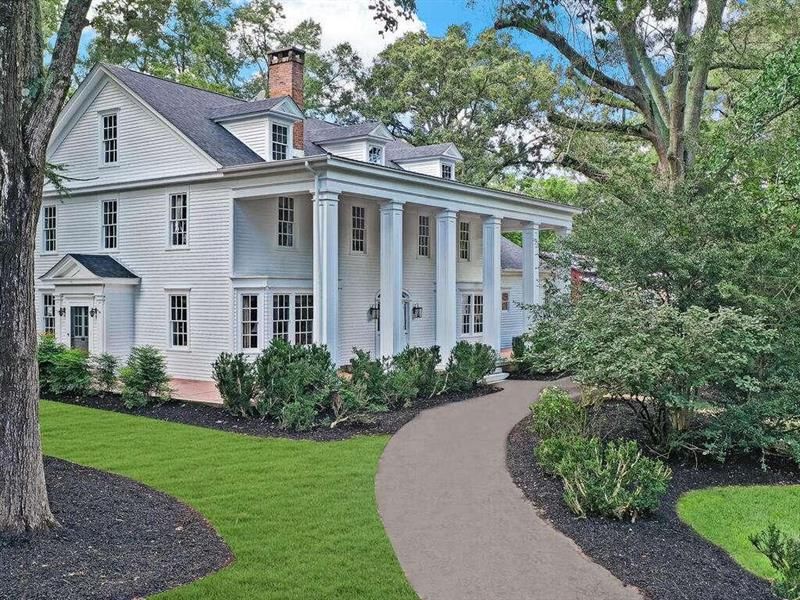
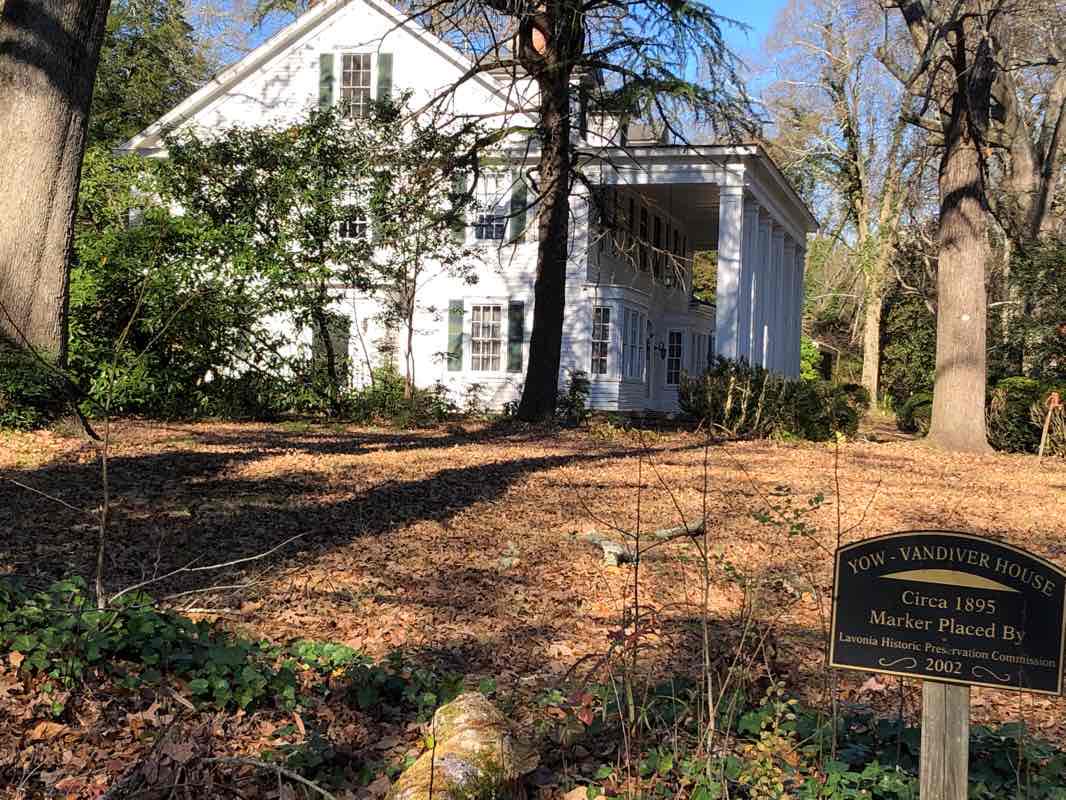
In the quiet northeastern corner of Georgia, the town of Lavonia carries the soul of the South—complete with historical landmarks, deep-rooted traditions, and influential figures that have left a lasting mark on the region’s identity. Among these legacies, the Yow House, located at 109 Hartwell Road, stands out not only as a beautifully preserved residence but also as the former home of one of Georgia’s most significant political leaders: Governor Ernest Vandiver.
While relatively unknown beyond the boundaries of Franklin County, the Yow House represents more than a well-crafted home. It encapsulates the architectural beauty of the early 20th century, tells the story of shifting Southern politics during the Civil Rights era, and exemplifies how local heritage can resonate on a statewide—and even national—scale.
This article explores the Yow House in detail: its history, architecture, connection to Governor Vandiver, and its lasting cultural significance in modern Georgia. By doing so, we aim to highlight an often-overlooked piece of Georgia’s story and encourage greater awareness and preservation of Southern heritage.
Historical Context of Lavonia, Georgia
A Small Town with a Big Story
Founded in 1880, Lavonia grew as a railway town along the Elberton Air-Line Railroad, connecting rural communities to trade routes. Despite its modest size, the town quickly developed a cultural and civic presence, including commercial districts, churches, and education systems.
By the early 20th century, Lavonia had become a prosperous hub within Franklin County. It was within this environment that Dr. R. T. Yow built what would later be known as the Yow House, a reflection of the town’s upward mobility and refinement.
The Yow House: A Symbol of Status and Architectural Harmony
Original Construction and Landscaping
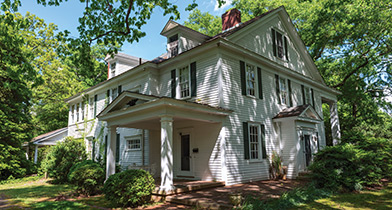
Built in the early 1900s, the Yow House served as a family residence for Dr. Yow, a well-respected local physician. The architectural style of the home combined regional charm with subtle elements of classical and Victorian design, typical of upper-class homes during that era in the South.
What set the property apart was its landscaping, which featured a variety of trees—cedars, oaks, hollies, and even ginkgo—planted by Dr. Yow himself. A decorative pond filled with goldfish and lilies added to the tranquility and natural beauty of the estate. These landscape choices not only showcased affluence but also a connection to nature, which was highly regarded in Southern domestic architecture at the time.
The Transition: From Yow to Vandiver
Ernest Vandiver and the Political Rise of a Lavonia Native
In 1953, following Dr. Yow’s passing, the house was sold to S. Ernest Vandiver Jr., a Lavonia native who had already begun climbing the political ranks in Georgia. After serving as mayor of Lavonia in 1946, Vandiver went on to become Adjutant General of the Georgia National Guard, Lieutenant Governor, and finally, Governor of Georgia from 1959 to 1963.
Vandiver’s governorship occurred during a critical moment in Southern history, as desegregation and civil rights demands challenged the traditional order. Although he initially pledged to uphold segregation under the mantra of “No, not one,” referring to allowing no Black students into white schools, his administration ultimately facilitated the peaceful integration of the University of Georgia—a key moment in the state’s civil rights timeline.
Modifications to the House
During the Vandiver family’s ownership, the house underwent modest but meaningful renovations. The kitchen was modernized to reflect mid-20th-century standards, a screen porch and sun deck were added, and the old powerhouse was converted into a game room. A charming gazebo was also constructed for the wedding of Vandiver’s daughter in 1974, further rooting the property in family and cultural traditions.
These changes did not detract from the historic essence of the home, but instead enhanced its livability while maintaining its character.
Cultural and Political Significance

The Governor’s Residence and Beyond
Though the Yow House was never an official governor’s mansion, it became an unofficial center of political strategy and community gatherings during Vandiver’s career. It functioned as a place where national issues met local values, and where the complexities of Georgia’s racial, economic, and political dynamics were debated behind closed doors.
Vandiver’s choice to remain connected to Lavonia, despite his high office, spoke volumes about his commitment to rural Georgia and the importance of small-town perspectives in shaping statewide policy.
Preservation and Recognition
National Register of Historic Places
In recognition of its historical and architectural value, the Yow House was added to the National Register of Historic Places on September 1, 1983. This designation ensured that the home would be protected and preserved as a vital part of Georgia’s cultural memory.
As part of this listing, architectural details, landscape design, and its association with a significant political figure all contributed to its importance. The house is part of a larger historical fabric that includes Lavonia’s historic downtown and the Southern Railway Depot, all of which continue to attract visitors and history enthusiasts.
The House in the Community Today
Educational and Tourism Opportunities
Despite its designation and rich story, the Yow House remains largely unknown outside of scholarly and local circles. It is not yet a formal museum, but its potential for community engagement is significant. With appropriate support, the home could become part of a heritage tourism initiative, offering guided tours, exhibitions on Ernest Vandiver’s political career, and community education on Lavonia’s role in state history.
Such development would align with trends across the South, where historic homes are being repurposed for cultural programming, economic development, and civic pride.
Why It Matters: Connecting Past and Present
The Yow House in Lavonia is more than just timber, brick, and tradition—it is a living document of American history, one that tells us about how leadership, legacy, and local identity intersect in small towns throughout the South.
The House as a Mirror of Political Transformation
At first glance, the Yow House seems to be simply a well-preserved home from a bygone era. But upon closer examination, it serves as a reflection of a region—and a nation—in transition.
Governor Ernest Vandiver’s political journey, which began within the very walls of this house, ran parallel to the seismic shifts in American politics during the Civil Rights era. His early opposition to desegregation eventually gave way to a more pragmatic stance, allowing the peaceful integration of Georgia’s schools. This change did not occur in a vacuum—it was influenced by both national pressures and deeply local perspectives. The Yow House was likely a site of private deliberation, where public policy was debated in a family context.
In this sense, the home becomes a symbol of change. It connects us to the pivotal moment when Southern politics began to evolve from segregationist roots toward reluctantly progressive action. The fact that this happened not in Atlanta’s capitol, but in a quiet corner of Franklin County, is a powerful reminder of how local decisions ripple outward to shape state and national outcomes.
Anchoring Identity in a Globalized World
We live in a digital age where history is easily flattened, and local identities are often lost beneath global narratives. The preservation of places like the Yow House is therefore essential—not just for the sake of heritage, but for grounding communities in their own stories.
For the residents of Lavonia and Franklin County, the house stands as a tangible link to the town’s more influential role in state governance. It reminds young Georgians that people from small places can impact national conversations, and that civic responsibility is not reserved for metropolitan elites.
More broadly, the house also reminds us that history is layered and imperfect. Governor Vandiver’s legacy is complex—marked by both resistance and concession. Understanding that complexity encourages modern readers to embrace nuance and humility when interpreting the past.
Read Also: Strickland’s Moonshine Distillery: Lavonia’s Hidden Gem of Heritage and Craftsmanship
A Catalyst for Cultural Preservation and Civic Engagement
Historic homes like the Yow House offer unique opportunities to educate, engage, and inspire. When preserved and properly interpreted, such places can function as community centers, historical classrooms, or cultural tourism sites that drive local economies.
In fact, by spotlighting the house’s story through articles like this, we help shift it from a private residence to a public narrative—a place where people can explore what it means to live in the South, govern with conscience, and navigate changing values.
By encouraging discussions on race, leadership, tradition, and progress, the Yow House becomes more than a monument to the past. It becomes a platform for modern civic discourse, helping communities wrestle with difficult questions and reimagine the future with clarity drawn from history.
The Enduring Relevance of Local History
Finally, the significance of the Yow House lies in its ability to bridge time. It brings the stories of the 20th century into 21st-century context, reminding us that we are not disconnected from those who came before us. The fears, hopes, compromises, and transformations that occurred inside this house echo in our politics and culture today.
When we preserve such homes, we are not only maintaining buildings—we are sustaining dialogue. And that dialogue is necessary if we are to build a society that learns from its mistakes, celebrates its growth, and ensures that even the quietest places, like Lavonia, are never forgotten.
Conclusion
The Yow House in Lavonia, Georgia, is not just a residence. It is a living narrative of the American South—a place where architecture meets history, and where the legacy of one of Georgia’s most influential governors continues to echo. As we seek to understand our roots and shape our future, homes like the Yow House deserve our attention, preservation, and storytelling.
By spotlighting this often-overlooked landmark, we are not only honoring the past but also investing in the cultural literacy and historical awareness of generations to come.